
Best Prenatal for Pregnancy & Breastfeeding: Why I recommend Needed Prenatal Multi
Updated: Jan 5

As a lactation consultant, most people assume my work begins after a baby is born. But in reality, some of the most important breastfeeding preparation happens during pregnancy — including how a mother nourishes her body long before labor ever begins.
One of the most common questions I hear from pregnant clients is, “What prenatal vitamin should I be taking?” Closely followed by, “Should I keep taking it after the baby is born?” My answer is yes — and choosing the right prenatal matters more than most women realize.
Why Many Prenatal Vitamins Fall Short
Most prenatal vitamins are formulated to meet the Recommended Dietary Allowances (RDAs). While RDAs are helpful for preventing deficiencies in the general population, they were never designed to support optimal nutrition during pregnancy and postpartum — two seasons that place enormous demands on the body.
Pregnancy increases the need for key nutrients like folate, vitamin D, choline, iodine, and iron. Then, after birth, those demands don’t suddenly disappear. For breastfeeding mothers especially, nutrient needs remain high as the body supports recovery, hormone regulation, and milk production all at once.
When nutrition falls short, I often see moms experience symptoms like:
occasional fatigue and slow physical recovery
brain fog and difficulty coping with disrupted sleep
increased worry around milk supply
greater vulnerability to perinatal mood challenges, especially when paired with exhaustion and depletion
Unfortunately, many prenatals use poorly absorbed forms of nutrients, contain minimal amounts that barely meet baseline needs, or omit essential nutrients like choline, which is critical for fetal brain development. This is why I’m thoughtful about the prenatal vitamin I recommend to my patients.
What Makes Needed Prenatal Multi Different

When patients ask me what prenatal vitamin to take, I recommend Needed Prenatal Multi because it provides methylated folate (not folic acid), active nutrient forms for better absorption, and clinically studied dosages of vitamin D3, choline, and more nutrients that support neural tube development, maternal health, and fetal brain growth throughout pregnancy.
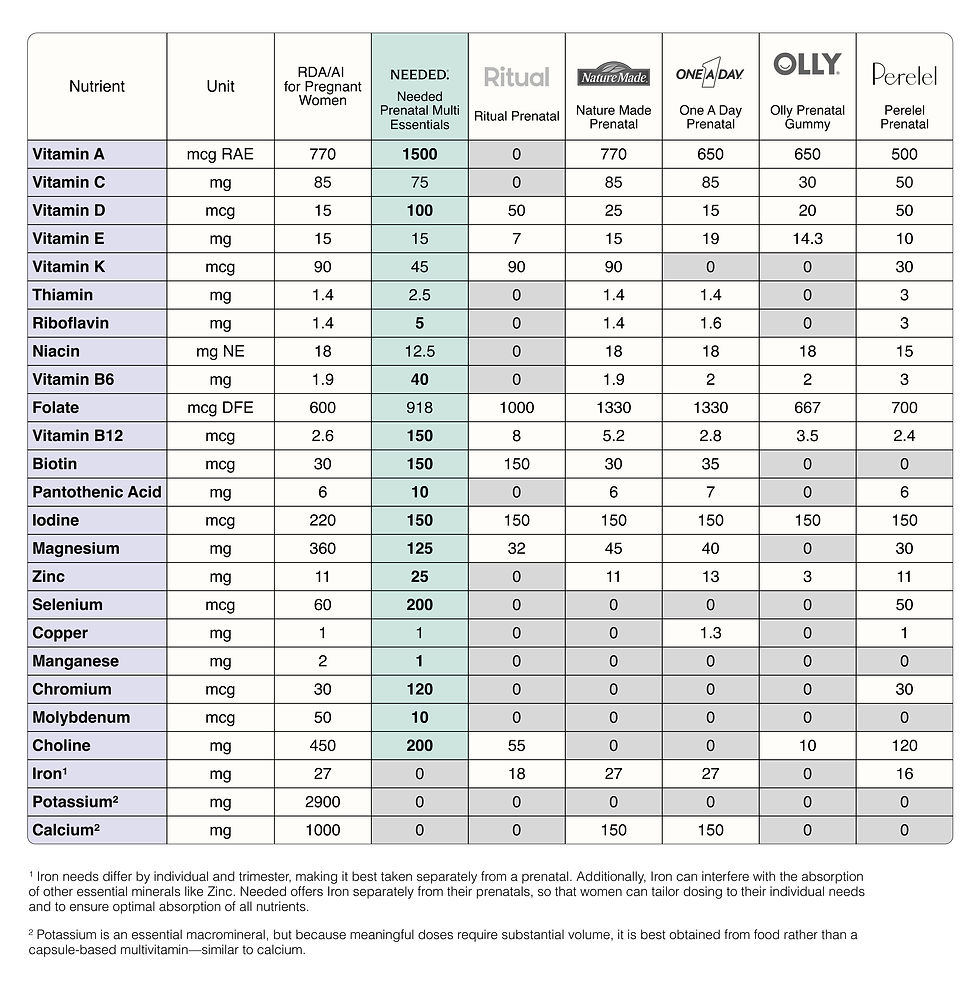
Needed’s Prenatal Multi is formulated with optimal amounts in mind — not just minimum requirements. It provides 8x more nutrition than other popular prenatals*. That distinction matters. During pregnancy, absorption can be compromised, and nutrient demands are higher than standard guidelines often account for.
By using bioavailable forms and meaningful amounts, Needed supports early fetal development, maternal nutrient stores, and a smoother nutritional transition into postpartum. You can explore Needed’s Prenatal Multi here: https://thisisneeded.com/products/prenatal-multi-essentials
Here’s how Needed compares to the RDAs and other leading prenatals. You’ll notice Needed Prenatal multi provides 5x more nutrition than outdated Recommended Dietary Allowances.*
Why Prenatal Nutrition Matters for Breastfeeding, Too
Even though prenatals are marketed for pregnancy, I talk about them often with clients who are planning to breastfeed.
Breastfeeding doesn’t happen in isolation. Milk production depends on many factors including: maternal nutrient stores, metabolic health, and hormonal balance. When a mother enters postpartum already depleted, challenges like low energy, emotional overwhelm, and heightened concerns about milk supply are far more likely.
This is something I understand both professionally and personally. Earlier in my own motherhood journey, I relied on lower-quality prenatal vitamins that focused on checking boxes rather than truly supporting the body. The result was a much harder postpartum recovery, deeper depletion, and a longer road back to feeling steady and well. That experience fundamentally changed how I approach prenatal nutrition with the families I support today.
Preparing for breastfeeding doesn’t start after birth — it starts with nourishment during (and even before) pregnancy. Continuing a high-quality prenatal like Needed Prenatal Multi into the postpartum period can help support nutrient replenishment after birth, energy and physical recovery, emotional steadiness during a vulnerable transition, and the ongoing nutritional demands of lactation.
This isn’t about perfection or preventing every challenge. It’s about reducing unnecessary strain during a season when the body is already giving so much.
Why I Recommend Needed to My Patients
I don’t recommend products lightly. As both a clinician and a mother, I’ve seen the difference between “good enough” nutrition and truly supportive nourishment.
Needed’s Prenatal Multi aligns with how I support mothers in real life. It prioritizes bioavailable, well-absorbed nutrients, addresses common gaps I see in pregnancy and postpartum nutrition, and supports both pregnancy and breastfeeding without requiring an immediate switch after birth.
For pregnant women preparing to breastfeed, choosing a prenatal that supports both seasons is one of the simplest ways to care for yourself now — and later. If you’re pregnant or thinking ahead to postpartum, Needed Prenatal Multi is the prenatal I consistently recommend.
*Based on the total daily dosage of nutrients provided compared to leading prenatals as determined by IRI sales data as of December, 2025.

Jaimie Zaki is an International Board Certified Lactation Consultant (IBCLC), Mom of 5, and hostess of the Breastfeeding with Confidence Podcast. Jaimie provides virtual lactation consultants to help moms across the USA breastfeed their babies through challenges like low milk supply, latching pain, tongue tie, return to work and more.
Disclosures
This post is sponsored by Needed, a brand I genuinely recommend to my patients and have used personally. These statements have not been evaluated by the Food and Drug Administration. This product is not intended to diagnose, treat, cure, or prevent any disease.


